New Italian niche project: Angela Ciampagna (2015)

So, here's the last nice discovery I made while visiting Milan's tradeshow Esxence a couple of weeks ago. Angela Ciampagna is an exquisite line of perfumes composed, produced and marketed by Label, which is a small family-run artisanal laboratory producing fragrances and candles located in Atri, a fantastic small village in the South-East of Italy. You may expect then a "traditional" artisanal line of fragrances with good raw materials... you wouldn't be entirely wrong, but that's only one of the features of Ciampagna's line. There is much more you wouldn't expect at first. First of all, these fragrances smell incredibly contemporary, even avantgarde to some extents. And they show an incredibly clear fil rouge, a perfect stylistic consistency, a really clear recurring inspiration which creates a solid background for this line. I would summarize this inspiration with "post-modern Mediterranean gothic". Not sure if that makes sense but that's how I picture Ciampagna's world: there is a feel of "darkness" tightly connected to nature and to countryside, making you think of paganism, spooky traditions, the elusive and austere quiet of desolated ancient villages. But there's also a clear feel of modernity: the compositions are creative and clever, the textures are sharp, breezy, polished, unpredictable, non-classic for sure. Definitely contemporary, but with a recognisable and clear "South-Italian heritage" footprint. Finally, the fragrances smell at the same time incredibly refined and appealing. And the guys are kind, passionate, humble. And look at those packagings!

They offer a really fairly-priced sample set on their website. Grab that! For the meantime, here's my favourite three from the line (you'll find the rest of my reviews on Fragrantica - and Basenotes, once they will add them to the directory).


++++++++++++++++++++++++++++++++++++++++++++++++++++++++++++++++++++++++

Liquo
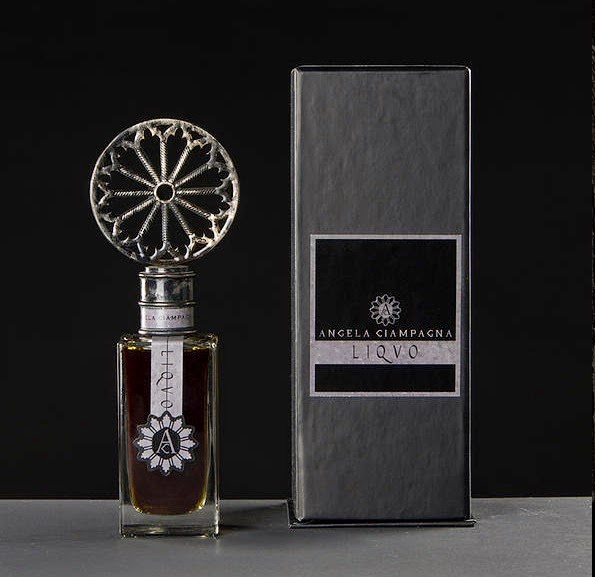


Holy grail stuff for any licorice-hay lover. Liquo opens with an extremely vibrant, realistic, darkish smell of licorice sticks, wet hay under a cloudy sky (think of the hay note in Heeley’s Cuir Pleine Fleur... just in 3-D full power), anise, a ton of dusty and sharp cumin, woody notes, with a gentle touch of lavender and powdery flowers. Mediterranean to the bone, a thick blend transporting you right into a small village’s fair, blending the smell of home-made, non-sweet – rather salty on the contrary – licorice and anise candies with earthy whiffs of barn smells from farms and fields – hay, woods, herbs. That’s it, and it’s terribly good for me. The notes smell raw and realistic, but the blend is extremely refined, crisp, “polished” in a good way; so don’t expect anything overly “hippie and artisanal”. It surely smells natural and almost organic to some extent, and surely shows an artisanal touch – especially that fantastic note of hay – but overall it’s all tamed down and mastered enough to appear as a proper work of high class perfumery. A win-win compromise, shortly: wild and sophisticated. Also, don’t expect any gourmand scent: too earthy and realistic for that. Quite dark too, or better say with a palpable sort of “rainy” feel... ever been to the countryside after a storm? That’s the smell. Peaceful, but almost unsettling, with a soothing, drier and dusty-smoky drydown. A velvety somber perfume managing to smell extremely elegant and enjoyable yet “uncivilised” and moody, with some “gothic” vibe underneath – a “rural” kind of gothic deeply rooted in the elusive quiet of the Mediterranean countryside. Great materials as far as I can tell. Solid and evocative.

8,5/10

+++

Ducalis


As the rest of Ciampagna’s line, the “visual” inspiration and the ambiance are quite clear since the very first sniff: a sort of dark, provincial “austerity” somehow sitting between a feel of desolation and a raw, archaic, vibrant naturality. In “olfactive” language: dryness, thickness, earthiness, a palpable “artisanal” feel, an overall dark and meditative mood, but at the same a peaceful sense of quiet thanks to balsamic and aromatic spicy-herbal-floral notes - I guess evoking the “soothing power” of nature. Ducalis is particularly, elegantly dark and dry at first, yet with a warm heart, mostly focusing on a thick woody-floral blend with dark shades and spicy hints; as minutes pass though, it progressively unravels its beautifully intricate texture, which is quite more than you would expect at first. Sweet, velvety, slightly metallic flowers on warm, balmy but also dry and really austere woods: two main “axes” each comprising several facets that you get throughout the evolution. Flowers range to the threatening obscurity of rose and jasmine, to “whiter shades” of lily and cyclamen; the same for woods, which comprise nuances ranging from sandalwood (“juicy”, sweet, bright and cozy) to drier, shadier and “woodier” notes of rosewood and cedar, with some added weight thanks to cloves, leather, and nutmeg. A touch of amber and vanilla provide some sweet and warm “roundness”. Overall Ducalis may appeal fans of oud scents as well, as it shows some similar sort of “dark silky thickness”, just more complex and aromatic – not due to a single note (but indeed, woods, jasmine, nutmeg and leather do create a similar aroma). On the other hand, flowers are worked in a really peculiar way here, which kind of just uses “some” nuances of them; so despite you see many of them listed in the composition, I wouldn’t define this a “floral scent” – rather a woody scent with many interesting and complex nuances, this including flowers. Artisanal to the bone, totally fascinating and sophisticated but at the same time kind of raw and dark. Utterly enjoyable. Bravi!

8/10

+++

Hatria


Hatria opens with a really compelling and thick rose-oud combo which smells finally slightly different from the usual clichés of these notes, so don’t think of Montale rose-ouds or similar stuff. Of course that’s the family, but Ciampagna made some efforts to do it in a slightly more personal way. It’s dark, classy and “juicy” as one may expect, but has also a salty, balsamic-herbal quality which definitely brings the blend closer to a Mediterreanean inspiration – something more unusual for such notes in my opinion. The notes are quite simple to get, they smell quality to me and are perfectly blended: rose, herbs, oud, a balmy-ambery sweet base accord with a great sandalwood note, and an overall warm breeze echoing vintage fougères (cloves, patchouli, musk...). The “caramel” note, luckily I almost don’t get it; more than an individual note, I think “caramel” here (whatever they used to build that) provides just a sort of dark, warm, slightly sticky thickness that perfectly gives “weight” to the composition. Another note which I don’t get is saffron, although I do feel a sort of dusty, spicy, “culinary” and Mediterranean feel. Most of all anyway Hatria is about rose, oud, patchouli, sweet-balsamic warmth. A sure “yes” for me overall: it smells deep and quality, and the composition – which is quite linear, though – is crafted in a way that it conveys a fascinating feel of warm abandon as you may experience in a sleepy desolated village in the deep South of Italy – kind of dusty, sweet, earthy, with a balmy feel of “suspension”. Lights and shades. Refined but with a nice “rural” feel.

8/10


New Italian niche project: Unum (2015)


So, together with Rubini, here is another fantastic discovery from this year's Esxence tradeshow in Milano. Tattooed artist, former church organist and now renowned ecclesiastic tailor Filippo Sorcinelli and his team at L.A.V.S. atelier are the creative minds behind this project, three fragrances manufactured by Cererie Terenzi (yes, that means they would be good anyway...). Passionate people with a really solid, broad and cultured approach to perfume making. A terrific consistent mixture of dark contemporary avantgarde aesthetics with Medieval Gothic art and architecture, and a keen eye on a non-banal "spiritual" approach. A "non lieu" anywhere between Nicola Pisano and Anne Wenzel. Or Christian Rinck and Kas Product, or a Kompakt dubplate. Three complete standouts.

________________


LAVS


LAVS is the first scent in (chrono)logical order from this line, meant to represent the “roots” of Unum – which are grounded in L.A.V.S. atelier (“Laboratorio Atelier Vesti Sacre”), a successful Italian tailoring workshop that produces vestments and regalia – even for the last two popes (Benedetto and Francesco). LAVS was basically produced as a room fragrance the atelier’s staff used to apply gently on the garments before delivering them to clients and sell as a room scent. Once they realised clients liked to wear it too, Sorcinelli and his team thought about starting a line of fragrances. LAVS is that early "non-scent" just reworked in a “wearable” form. And just to get straight to the point, it’s an incense scent. A majestic one, a “liturgical” one with a subtle exotic vibe, and despite I am not the most enthusiastic fan of this family of scents, one of the greatest around by far for me. What makes it great, besides an undisputable high quality, is that it finally shows some complexity and some classy, clever work with notes; whereas most of other incense scents just rely on a repetitive and overworked couple of molecules (which smell fantastic, like Givaudan’s Mystikal, or just bare play with Iso E), LAVS is built around a more complex evocation of a liturgical ambiance – the garments, the incense, the rituals, the history, the dust, the cold feel of metal and gold, the intimate relation one establishes with all of this. With some facets evoking more distant references, from coriander to spices, that provide a subtle but palpable sort of pagan, exotic feel.

The main accord is incense though, which smells dark, grey-ish, with a slight ash aftertaste but also breezy metallic nuances, not overly synthetic; and it’s beautifully and perfectly melted into a really airy and uplifting blend which definitely plays the balsamic-herbal-spicy card – I personally get sharp cloves, pepper, coriander and aromatic woods above all. As hours pass it becomes warmer and quieter, still carrying a powerful, and almost intimidating “ritual” feel; a round, mellow and resinous ladbanum-amber note with a hint of dark fruitiness emerges, defining the frame of LAVS and tightly connecting it to the other two scents of this line which contain a similar accord – like a secret sign of masonic brotherhood. So despite being at first clearly a monolithic incense scent, and to this extent being similar to others, it has definitely so much more to offer. If you compare this to other “liturgical” references like Comme des Garçons’ Avignon or Jovoy’s La Liturgie des Heures, you can easily get what I mean. Mostly because as I said, most of other incense scents stop at a more shallow level of “incense-ness”, just recreating and reiterating that same accord which simulates a cliché of incense.

Maybe also because LAVS is an extrait de parfum and therefore is also deeper and richer in nuances than Eau de Parfums, or maybe because Sorcinelli and his team know what they’re talking about when they talk “spirituality” ... but LAVS goes just deeper and further than any other, with a  passionate, balanced craft work around the nuances of incense. Spices, amber, musk, aromatic woods, flowers, they all discreetly enhance the main accord and they all help to define and deepen the incense aroma, like participants in a ritual. Not a thick scent, though, and above all, not “heavy” as you may expect: it’s deep and enveloping, but as regards of its substance, it’s incredibly balanced, really “spacious”. Totally pleasant to wear, even effortless. And well, all that aside since we’re talking about a perfume... the fragrance itself smells great, sophisticated, with a cozy and spiritual mood and a quiet feel of “sacred” austerity. If you’ve a penchant for “meditative” fragrances with a refined look, this may easily sit among your holy grails. Total quality.

8,5/10 

+++

OPUS 114


Probably my personal favourite among Unum line, despite the really bold opening which may be off-putting at first. Opus 1144 is inspired by the born of Gothic architecture and art and shall be meant to be a tribute to it; and believe me, if you try a non-prejudicial, “synesthetic” association with the idea of Gothic cathedrals and frescoes and all the cultural implications they were meant to convey, it does trigger an association. Nothing to do with incense or other more “liturgic” aspects, here the reference is the material feel and smell of stones, marble, woods, flowers, candles, paper, which all together create the “meditative majesty” of that artistic style.

The opening is triumphally bold and powerful: a thick, nearly overwhelming dusty-ambery blend (“ambery” à la Goutal’s Ambre Fetiche) with creamy candied-floral nuances (elemi and flowers) and a whole citric-astringent side of citrus and bergamot, perfectly opposing a warm and sweet vanillic base also comprising sandalwood (speaking decently-aged Shalimar here) ... in turn juxtaposed to dirtier, almost skankier notes of benzoin, jasmine, salty ambergris (forget ambroxan, I mean salty, slightly animalic-aqueous ambergris), and something that reminds me of tonka – a sort of sweet-exotic almond touch. Thick, radiant and deep, gourmand-ish on one side (this even comprising a weird sort of balsamic vinaigre feel), almost chypre-sque on the other; slightly waxy - meaning both powdery-iris and leathery as in Lutens’ Cuir Mauresque - monolithic but somehow almost “lascivious” thanks to its softer-darker sides, slightly reminding me of the (few) best aspects of Mona di Orio style – that sort of dusty, antique vibe, just less baroque and more austere (and, ok, uncomparably better executed here).

The drydown is equally great, and for me is quite the key to get the whole beauty of this fragrance. After the citric-vanillic opening it enters a sweeter phase echoing tonka and resins (echoes of “guerlinades” again), then an un expected drift towards an incredibly beautiful powdery-dusty drydown with darker shades that is as much uplifting, peaceful and mesmerizing as looking at the dust floating in the light of a Middle-European cathedral. Complex but so fulfilling from the very first sniff to the very final drydown (Terenzi’s lab made this, and you can smell that). It’s quite hard for me to describe this fragrance, so I’ll just cut it here; as the other two of this line the composition is incredibly well enginereed and harmonic, really compact, it would be enough to say it smells stunning and perfectly connected to the concept behind Unum line, and that’s all.

8,5-9/10


+++

ROSA NIGRA


Within the concept of Unum line, which in rough terms drawns a line (pardon the pun) “from darkness/meditation to enlightenment/purification” with a tight connection to spirituality and Medieval Gothic architecture and art, Rosa Nigra is meant to be the third fragrance in order – the brighter, the sweeter, the “purer”. If you want to skip my review: a terrific standout, here and in niche in general. Not my personal favourite of the line, but still great. Although despite the name there is no rose in here, the first fragrance I though of as a rough reference at first was indeed a rose heaven - Lyric Man by Amouage; if my memory serves me correctly about that, I think here I get some similarities, mostly due to the “darkish” treatment of fruity notes, but overall tad quieter here, and less opulent. And honestly far more fascinating, less suffocating, with just the right amount of “weightlessness” and airiness allowing you to experience a really “dimensional” composition.

Anyway, in the first minutes it does overall evoke a rose smell somehow, especially its more dark-carnal and syrupy-fruitier sides, but avoiding any camphorous-soapy effect. Complex on one side, but also totally “straightforward”, almost simple on the other. Basically it’s a sort of bright and uplifting fruity-herbal sandalwood scent with velvety floral nuances and a warm base with powdery-vanillic hints. More fruity at first, with an incredibly nice smelling peach note (vintage Piguet’s Visa somewhere there...) showing a slight aqueous substance, surrounded by juicy flowers, leafy herbal angles and enriched by sandalwood. A clean texture, substantial but elegantly balanced between crisp sharpness and balsamic exoticism, wrapped in a sophisticated, warm and enveloping allure (the “trait d’union” among the three fragrances – a dusty, vanillic, slightly fruity ambery accord). On the drydown, quite the same but woodier, more discreet, somehow muskier too. Dense, rich, incredibly refined and appealing, deeply fascinating, with an undisputable high quality of materials and an irresistible feel of peace and radiance... still, with an austere, and kind of dark vibe, like the other two scents of this line. “Dark” in a “liturgical” meaning again, if that makes sense.

All of this backed with a solid concept: I usually can nearly never stand marketing releases and “storytelling” stuff, which often look like an unnecessary boring load of clichés, but here’s different – just give a look at Rosa Nigra’s page on Unum page while sniffing the perfume, you’ll get what I mean (if you read Italian). There is indeed a solid connection showing the brand’s solid and cultured approach to perfume making. A honest and non-shallow tribute to the “sacred sense of beauty”. Rosa Nigra perfectly fits some facets of this, as the other two fragrances do with other aspects. Perfect quality to all extents. Bravissimi!

8/10


Fundamental by Rubini (2015)


Fundamental by Italian newcomer Rubini is meant to act as a tribute to an early 1900s “Italian Belle Epoque” inspiration, more specifically of the North-East of Italy where Rubini’s heritage is grounded, but with a contemporary, almost hyper-modern feel – as you can imagine by looking at the (supercool, and quite clever) packaging designed by Francesca Gotti (nu_be). This “past into the future” thing may sound as a cliché, and it sure is quite often; but it isn’t here. First of all because there is no generic “old Italian heritage” inspiration, but a specific geographical reference (Verona – which means shortly: wines and cafès); then because the composition totally reflects it, finally getting rid of, again, “old Italian heritage” clichés in perfumes. What you get at the first sniff is a surprisingly good and compelling grapes note that manages to smell fruity, bitter, fresh, kind of Mediterranean, really aromatic and slightly pungent, with a crisp wine vibe; while it isn’t overly and predictably “boozy”, it does provide instead a sort of domestic, almost “rural” but at the same time extremely sophisticated feel, also thanks to the silky and aromatic - and again, Mediterranean - note of sage that perfectly enhances the herbal fruitiness of grapes. Herbs and grapes in turn perfectly blend with a nostalgic kind of “eau de cologne” vibe (a thick, raw, almost “urinous” lavender note, woods, the bitter-astringent side of grapes) and a carnal powdery accord (iris) aimed at evoking the playful lasciviousness of brothels and dancing cafés (early 1900’s, again...). An overall smoky feel and a woody accord also comprising costus (rubbery feel) complete the blend – iris and costus will then remain quite bold on the drydown. I think I get something musky too but I am not sure if the note is there.

The keys for me – meaning what I get more deeply and clearly - are however grapes, lavender, sage, iris, costus. Shortly, a kind of fresh-aromatic fruity-herbal scent with a bitter and almost animalic facet, some smokier and darker nuances, a sprinkle of powdery dust. And a ton of class. If notes don’t speak to you, here’s some images to think of; vineyards, wines, gentlemen, cafès (... and women). Not over yet, though: while some notes do clearly smell “retrò”, meaning dusty and kind of “dirty”, taking you right next to a Dannunzian gentleman and his shady businesses (the dirtier side of lavender, the powdery notes), and while others smell clearly “Italian” (herbs, lavender, grapes), there is also a distinctive sort of breezy, almost metallic and kind of wet concrete-like vein (violet leaves, maybe? I think I get some really slight similarity to Narciso for Him, to this extent) that gives Fundamental a crisp texture and a sort of polished, futuristic look – a jump forward in time, the cryogenic mummy of a dandy. Modern class with a heritage feel. I am super picky with niche novelties, but this is really good; the materials smell great as far as I can tell, the concept works, the owner (Andrea) is humble and passionate. And the composition is clever and creative. One of the niche standouts of 2015 for me so far (lucky for Rubini, niche market is so depressing these days... “easy wins are easy”).

8-8,5/10


Trussardi Inside for Men by Trussardi (2006)


Nose: Nathalie Lorson

Inside Man is a keeper, and a sleeper too. I had to wear this quite a few times to “understand it”. I mean: it smells great, and you get that instantly. It’s classy, warm, discreet, really sophisticated, but there’s something else which makes you coming back again and again to your wrist to wonder what you’re smelling. My experience was like: I get it smells great, I just don’t get what this smells of. “Nondescript”, shortly, in a totally positive way. Inside Man is stoutly, sharply “woody” at first, and I mean *really* woody, in quite an uncommon and un-natural way; more like a piece of luxury polished furniture. It’s the smell of mahogany, which is really dry, dark, exotic and mysterious. On top of that, a fantastic note of coffee – dark, roasted coffee beans; nothing gourmand for sure – and smoky tobacco: not an actuall smell of smoke, not the usual sweetish artificial tobacco note, and not bare Iso E Super like in many recent “smoke” scents, but rather an unperceivable, thin, perfectly crafted feel of someone smoking near you, like a really subtle whiff of nicotine. What I meant by “nondescript” is that all these notes are really tightly connected and so well blended together in a thin texture, it’s quite hard to understand what’s behind this great piece of “mainstream” refinement. You just get this irresistible, distinctive whiff of warm, dark good taste accompanying you like a perfectly-cut suit. Slightly “generic”, but just the right amount – I don’t mind that. It just “fits” perfectly. Sillage is discreet, but long lasting. Remarkable!

7,5-8/10


Cristobal pour Homme by Balenciaga (2000)


Nose: Gerard Anthony

The opening of Cristobal Homme is fantastic: that same, unmistakable anisic-fougère structure of Azzaro pour Homme “revisited” with a modern look. Sweet, fresh, cozy, velvety, terribly solid. If you know Azzaro pour Homme, Cristobal will give you a really pleasant feel of “déja-vu”: basically here you get that “old school vibe”, mostly from citrus-anise-lavender-woods, perfectly mixed with a totally compelling “late ‘90s style”: soft creamy woods, tobacco, an overall sweet powderiness. Gerard Anthony perfectly nails it again in creating something smelling irresistibly, desperately good – with again, as for Azzaro, a stunning level of depth and quality (back when budgets for fragrances were still high...). By “smelling good” I mean something which is at the same time easy to pull off, friendly, cozy, probably crowdpleasing, yet sophisticated, refined, and totally distinctive. This is what I personally value the most in perfumery; you need talent to make distinctive “artistic” perfumes, you need talent to make versatile crowdpleasers, you need to be a perfume-making superhero to make something comprising them all this well. So uplifting and enjoyable. The “modern aromatic fougère” par excellence, warm and sweet, perfectly “modern” yet perfectly timeless, which only a nose like Anthony could accomplish. Delightful, sophisticated, versatile. Grab any bottle you can find – go, now!

9/10


Jazz Prestige by Yves Saint Laurent (1993)


Jazz Prestige is a really bizarre scent, and one of the few whose name perfectly reflects the juice. I am a big fan of jazz, and this scent is indeed “jazzy” as regards of its composition and evolution; it’s daring, creative, playful, unpredictable and most of all, with the same “clashing” structure of a free jazz improvisation. It has a really bold and perfectly crafted interplay of shades and lights, bright notes and darker nuances. What strikes me the most to this extent is the opening phase, which also perfectly integrates the “prestige” feature: an incredibly radiant, fresh, crisp and sharp green-citrus accord with breezy flowers (geranium above all) that, however, smells just deeply different from, well, any other “citrus floral accord” you may think of: not sure what it is due to, but the term that comes to my mind to describe this would be: abstract. Not in a theoretical meaning, rather I think of abstract art: it’s all just colorful, dynamic and almost chaotic, like a Pollock painting. Take a conventional citrus-herbal-floral accord, throw it in a blender, replace it there, here’s Jazz Prestige. And underneath that, a really formal, cozy and classic fougère structure as in the classic Jazz version, a “barbershop” symphony made of sandalwood, lavender, herbs, carnation spices, smoky notes, maybe a hint of leather too. The coexistence of these two “veins” – basically, “classic” and “creative” – is mindblowing. This flanker is a really precious, special and deeply creative rewriting of the original Jazz, which adds both artsy madness and a luxurious feel of golden refinement – due to the peculiar treatment of citrus-greenish flowers notes, again: crisp and clean like a freshly ironed shirt. You know what I thought of too? The “brat pack” group of novelists – McInerney, Bret Easton Ellis, that group of American authors which portrayed the conflicts of the young, wealthy and spoiled generations of the ‘80s and early ‘90s, their pop luxury, their “camp” culture. Not sure why, but I feel Jazz Prestige shares the same “vibe” of many of those characters – it smells “rich”, ironical, bizarre, vibrant, almost naughty. Playing with classic notes like a postmodern composition. And I am not saying it smells like something those guys would wear; I mean more like an olfactive depiction of them. Not sure if that makes sense and surely isn’t helping much to understand this fragrance, so... just this: it smells fantastic and really – really! – ahead of its time. A true gem worth looking for.

9/10


Rudis by Nobile 1942 (2014)

Don't.


Nose: Antonio Alessandria

The opening of Rudis is fairly nice, a decent boozy-wine-immortelle accord on spiced roasted leathers and woods, shortly something halfway Tango by Masque and 1740 by Histoire de Parfums (more than “halfway”, simply an uncreative, derivative hybrid between these and a couple of others). Not that creative, and quite much “trendy” considering how vastly this boozy-leather-immortelle thing has been exploited in niche; but still “better than nothing” as the saying goes – as long as it smells nice, I am fine with being plain trendy and uninspired. The notes smell quite dull and a bit cheap though, surely not the deepest, thickest and most fascinating texture around, but again... not the worst you can stumble upon, especially if you’re familiar with Antonio Alessandria style. I would expect something outstanding given this is “niche”, the élite of the élite, but nevermind. The main issue here, and in this case it’s so severe I consider it a total deal-breaker, is how weak, light, unsubstantial this scent is. After literally 15-20 minutes it melts down like snow under the sun, leaving you with a subtle, depressing leathery drydown which you would legitimately expect after 6 hours – not 20 bloody minutes. A vague, faint boozy safraleine drydown. Which has actually *no* drydown, as it just goes away after a couple of hours. Now... I would accept this if it was about a light, green, crisp citrus “haiku” à la Ellena; but how on Earth can one think to make a “bold boozy leather” this way? It’s like trying to sell boxing gloves made of omelette. “Rudis”? Bold and courageous like an anemic underweight teenager. Not giving a complete “no” just because for 20 minutes it smells nice.

4,5/10


Narciso Rodriguez for Him by Narciso Rodriguez (2007)


Narciso Rodriguez for Him is a mainstream gem, and an unnecessary evidence of how Francis Kurkdjian works so better on commission (who’s the least fan of his own “cheap-luxury” brand? Me). Anyway: the opening is fantastic and unmistakable, a leafy, dark, astringent “greenish wet concrete” which smells of pungent humid darkness – a moldy, harsh, filthy kind of urban darkness, with a genius hint of dry lipstick. Despite it is a designer scent aimed (one may guess) at a broad audience, it delivers an incredibly gloomy and funereal mood, really fascinating and terribly well executed: a gothic, crunchy, really bitter violet leaves note on dark, dry patchouli and an aloof, musky “grey concrete” note. Pure poison for a quite simple composition which however is iconic and really unique, smelling like lipstick, dead leaves, vitriol, wet streets. A “post-modern” world which makes you think of those alienating metropolitan areas just at the very borders of the suburbs, where abandoned warehouses meet abandoned woods – you’re not yet into “pure nature”, but out of civilization already. Narciso smells of all of that. Which makes it surprisingly “niche” (I said that in a positive meaning for once), far more than all the dozens of depressing, uninspired overpriced bullshit which make their way to niche price tags. Not a crowpleaser for sure, but safe enough somehow; it is dark but terribly refined and sophisticated. It makes a “statement” so it’s definitely one to try before buying; but I wouldn’t really consider this daring or weird. It’s perfectly compelling, just a bit dark with a sprinkle of freakness. The only flaw I would mention would be maybe its objective quality, meaning that in my opinion the materials here aren’t exactly top notch – especially on the drydown, which is quite linear, a bit cheap, and maybe boring after some hours. But who cares for once – this is evocative, even its “cheapness” may have a creative role here, as in fact we’re talking about concrete and dead leaves – nothing fancy and nothing luxurious. A real gem, if it was discontinued it would be praised like a holy grail.

8/10