Dia Man by Amouage (2002)


Dia Man by Amouage is stunning. Stunning! Not my favourite Amouage to wear “daily” and forget about it, due to its very subtle presence on skin (which for me would be a crime to miss, so I’d rather wear it when I’ve enough attention and peace of mind to appreciate it), but surely and by far, probably my favourite ever of their range as a work of... hell, there, I’ll say it: a work of art. I think it accomplishes a level of vibrant creativity and impeccable perfection no other Amouage ever did, except maybe for Ciel. But Dia probably pushes the limit even above that. It manages to be smoother, to subtract even more, to make an even more precarious, complex and thin balance perfectly stand still as a transparent ice sculpture. Just replacing ice with air. Others in their range are more easy to love, richer and more fulfilling maybe, surely performing better and thus being more appealing and easier to wear. But Dia Man is just something different.

On paper it is seemingly quite a simple, understated floral-suede-vetiver scent with spicy-green accents – and you could wonder where’s the deal.  The deal is precisely in how Dia transform that mildly promising, yet probably not-overly-exciting structure into something completely amazing. And that sadly can’t really be described with words, which would only make it sound undeservedly boring. Or well, mines would surely. I could mention a mind-blowing weightlessness, a unique sense of natural refinement, an amazingly, almost hypnotic slow evolution bringing in and out vetiver, smooth smoke and posh powdery suede, quiet clean woods, delicate breezy flower petals (orris, peony, ylang) which you can almost feel agitated by some gentle wind, an incredibly crisp yet almost unperceivable sort of grassy-minty aroma breezing erratically through the notes as a fairytale ghost of an elf, a genius touch of silky fruitiness... but that would all make Dia sound “just as another good scent” – while it isn’t. Not because it isn’t good, obviously, but because it’s beyond a scent - it’s a world, really. I would add “totally unparalleled” if Hermès Cuir d’Ange didn’t exist, as in some way, I think these two scents share some connections – both in some notes (especially the powdery-suede treatment), in their stunning quality, and in their general texture and inspiration. But creativity-wise, Dia is probably a tad superior to that, as it dares a bit more in terms of minimalism and complexity. The palette is broader here, so to speak, but surely they share some roots.

Pardon this personal detour but in a way, Dia Man reminds me of some summer holidays I used to make in Switzerland, Engadin valley, some years ago. I always admired and deeply enjoyed the sense of cleanliness, clarity, purity and almost unsettling calm you can feel wandering through the lakes and the Graubünden mountains in the summer season, together with the warm, cozy, subtle yet somehow also very austere, pragmatic, even slightly decadent neat elegance of many houses and cafés there. In my memories the world there was all green and blue with a sprinkle of flowers, a constant uplifting crisp breeze, a Swiss sense of restrained elegance combined with a deep, archaic love for nature and for the mountains, with their dark shades and primitive secrets (which a couple of clouds are enough to transform from heaven to the most frightening place on Earth). I mean, Nietzsche spent his holidays there, in Sils Maria’s village – you get what I mean. It’s not only about some fresh air and good food to seek some rest. It’s like wandering through human nature. Now ironically Amouage’s heritage hasn’t much to do with of all that (or maybe it has?), and yet the refreshing, soothing sense of sophisticated, almost meditative yet also very “civilized” raw naturalness is quite the same. Probably “natural elegance” hasn’t ever make so much sense as it would for Dia Man. And it’s something really beyond simple charm, or a simple “natural feel”. It’s truly the modulating smell of a whole ideal world in a bottle, a blend of crisp archaic nature and modern cozy refinement. And the choice of giving it such a discreet, subtle texture is just pure genius to me, as it really feels like a call to your sensitivity and intellect to appreciate it at its fullest. Brilliant!

10/10

Leather by Franck Boclet (2013)


Nose: Melanie Leroux

I recall I tried this once a couple of years ago and was more pleasantly surprised than I would have liked to admit – it’s niche, it’s quite overpriced, for a die-hard “anti-niche” like I was (and partially still am) it’s sometimes hard to admit that something smells nice. Now I got the chance to smell this again and yes, it smells definitely good. By “good” I mean here my favourite interpretation of the term, applied to perfumes: “solid and creative”. This is in fact something quite different and finally, quite more unusual than the majority of today’s niche leathers (which smell either like bitter rubber or whatever other ill, unwearable idea of leather, or just like Tuscan Leather clones). It opens with a sort of medicinal-nutty accord of amber, mild patchouli and some quite good saffron, mixed with a delicate sort of salty, salicylic-musky “polished” leather with a hint of rubbery oud, topped with a crisp, very mild yet perceivable “fresh” balsamic whifff of woody-floral notes. Quite unusual, as I said: it blends some clean, musky-modern leather as in Lang’s Cuiron with M7’s “nutty-medicinal amber” (actually, the resemblance to M7 is quite bold here for many aspects, and that just hits a soft spot for me), perfectly blending them under a sheer floral-balsamic light. The result is extremely pleasant, compelling, flawless and totally nice to wear. It feels nutty and woody (or better say mostly “cedary patchouli”), quite spicy but in a smooth crisp way, at the same time also feeling “musky” clean with a hint of salt. Overall it does convey a sense of modern, clean, freshly-polished “leather” without involving the usual clichés of these types of scents (and without basing the concept on a load of uncooked rubbery aromachemicals). I’d also mention Cuir d’Ange as a distant reference for the musky-powdery leather part, although Boclet’s Leather goes on a totally different path – nutty, ambery and medicinal as I said. But in a way, it also has this “breezy” powdery side which definitely echoes Ellena’s masterpiece, too.

Just to be clear, I dropped some really big names here – Cuiron, M7 and Cuir d’Ange. It’s not that Boclet’s Leather can be compared to them, as it definitely can not: it’s just that the inspirations seem to me recalling these works, whether that’s intentional or not, and that’s really a plus since the majority of leathers today seem often pointing towards other, vastly more trite directions. This one instead tries at least to think leather out of the box and do some - at least, partially - creative work on it, with just the right touch of 2000s nostalgia. And the materials work fine too, it smells very nice, rich enough yet totally smooth and discreet as a proper “modern refined leather” should. Partially synthetic too, sure, but it fits the concept and there’s some work around it. Still a bit overpriced and with a slightly disappointing longevity, but a more than worthy addition to any leather fan’s wardrobe.

7,5-8/10

Dzongkha by L'Artisan Parfumeur (2006)


Nose: Bertrand Duchaufour

I’ve never been a fan of L’Artisan fragrances, let alone the uncontrollably prolific Bertrandingo. But one thing I’ve to admit – in the extremely seldom circumstances where they both work at their best, with decent budgets and some solid inspiration, the results are great. And this is definitely the case. This is easily one of the best woody-iris scents on the market, brilliantly succeeding in blending the utmost versatility and wearability with a tremendous level of creativity and quality. Basically I agree with the reviews (including Luca Turin’s one in his Guide) which connect Dzonghka to Timbuktu, as this is indeed basically Timbuktu with iris, which is amazingly blended within that peculiar sort of transparent cypress-woody and subtly leathery structure adding a powdery, rooty, dry and earthy-waxy texture which fits it just perfectly. It’s like to smell the smoky, greenish, autumnal “papery” woodiness of Timbuktu shyly blossoming in early March. Not a “floral triumph”, just some faint, pastel, still quite dark accent of rooty-floral notes rising from the soil, soon joined by a subtle, warm tea note. This is pretty much of Dzonghka smells, and it’s just achieved perfectly. It’s graceful, elegant, natural, breezy yet very cozy: no cheap musks, no plastic iris. The concept is simple, the execution is clever and well mastered. Just some genuine, palpably realistic sprinkle of orris powder on smoky woods with a “mineral” salty aftertaste and a slighty touch of sweetness which will grow in strenght on the (impeccable) drydown. It’s poetic, complex yet quite straightforward, masterfully executed keeping Timbuktu’s great ability of smelling “airy” but totally substantial. And it smells fantastic anyway. Heart-warmingly austere and very classy. Plus, finally a decently-projecting, decently persistent L’Artisan, for God’s sake. Recommended!

8-8,5/10

Colonia Intensa Oud by Acqua di Parma (2012)


Well, nothing more and nothing less than one may expect from an “oud” take on Acqua di Parma Colonia. A wannabe-posh, soapy, sheer, very smooth (and very synthetic) sort of citrus-floral-musk blend infused with a dark, rubbery, bitter yet overall quite tamed down and exceedingly artificial woody accord of oud and birch, becoming drier and muskier as hours pass. I must say that somehow, the initial “fizzy-soapy” frame which comprises the oud accord works, and makes Colonia Oud smell as a fairly pleasant sort of “bright oud” with a laundry vibe. There’s a tangy sort of citrus-geranium accord which fits in surprisingly well. Given the bitter rubbery dirtiness of the synthetic oud note, it creates quite a pleasant play of contrasts – which will eventually fade away and leave the stage mostly to rubber and synthetic woods, but until it’s there, it’s nice. Still though, even considering that, it’s all really too cheap and ultimately uninspired to sparkle some interest. The “Colonia” side is just as flat and artificial as in the Intensa version (I’m still wondering how the Colonia line can comprise gems like the Assoluta next to utter garbage like the Intensa), and the oud accord is for me nothing different from any drugstore oud accord you can find anywhere these days. The price and the “luxury” packaging would let you think we’re in the same ballpark of something like, say, Dior Leather Oud, but truth is, we’re more close to Ferrari Oud, or Versace Oud, a Montale imitation dupe or whatever other lower-key designer ouds. Just a matter of quality: flat, synthetic, as much generically refined as completely “muted”. Nothing against that class of scents by the way, but there’s a reason if they cost three or four times less than this.

Not sure why (or well, reading what I just wrote until now, I can see why actually), but at the very first sniff my mind just came out with a spontaneous association – “what an airport fragrance this is”. Out of the blue, I just imagined a mid-level manager waiting for his plane. Not a wealthy businessman snorting fine complimentary cocaine in some vip lounge, just some ordinary businessman playing with an empty cracked bottle of water, boring the hell out of himself, probably needing a shower after a two hours taxi ride to the airport. Think of focusing your nose on some details – the citrus musky cologne he wore before leaving the motel now mixing with sweat, the cheap smell of his ready-to-wear laundered suit, the rubbery smell of his trolley bag and of the airport seats, the overall sense of suspended, depressing boredom which fills such “non-places” like airports. That’s the mood of Acqua di Parma Oud, basically somehow a sort of slightly more pretentious “office scent” with a professional look (not refined, not sophisticated, just “professional”) and subtle dirtier vein. And by that I don’t mean something “sexy” , just literally dirty, sweaty and rubbery. It’s all filled with a nondescript, quite deep feeling of restrained, unemotional “nothingness”. And well, it smells a bit more cheap than it should anyway. Not blatantly cheap and not completely tragic, but definitely unworthy the price tag. Kind of similar to Indonesian Oud by Zegna (and just as much dull as that).

5,5-6/10

Private Blend: Italian Cypress by Tom Ford (2008)


Bingo! My favourite Private Blend scent so far. Or better say, the only one I would say I truly like. I wouldn’t ever spend that money for this, but let’s be honest – this is very good. It’s basically a better (way better) Ralph Lauren Polo Green, which is a scent I moderately admire and really wanted to like, while I couldn’t really – pardon the blasphemy, but I find it (in both its vintage and new versions) too dry, unbalanced, screechily macho and almost vile. Italian Cypress just tweaks the right knobs and fixes that same concept to perfection, creating a very handsome, mature scent with a brilliant masculine vibe miles away the idiotic baseball-hatted “bro” attitude of half of the rest of the Private Blend line.

Basically it’s a very compelling, “virile” and old-school yet somehow totally contemporary green-woody fougère with an amazingly crisp sort of leafy-earthy feel of balsamic greenness and smoky woods. It covers the whole spectre of aromas you’d encounter in a forest, basically – from the thin fresh balsamic air, to the damp smell of woody roots. It may sound nothing special or new, but instead it manages to present such a conventional structure under a very different, and ultimately quite distinctive light. Probably the cypress accord is the key, as it’s green, minty and woody in a very peculiar way – a sort of bitter, watery, rooty, exceedingly realistic smell of crisp green woods. Now take that, surrounded by a half-macho, half-gentleman fougère-inspired aura of smoke-infused darker woods (slightly birch-y, too) and topped with an added dose of more rarefied citrusy greenness. Nothing really Italian actually, this smells more like some German forest to me, like in some Prussian area – it feels quite balsamic, uplifting, but at the same time somehow cold, dark, archaic. More “viking” than “macho”, so to speak. “Italy” shall mean probably more citrus, more herbs, and a more friendly, affable, laid-back mood, while Italian Cypress has some fascinating feel of dry, austere breezy darkness that definitely moves the inspiration way “more up-North”, in my opinion.

Anyway, inspirations aside this is a very well made scent, not overly creative but really impeccable. It smells just great: refined, quite natural, fascinatingly complex, subtly austere, it manages to do something I always love with fragrances – making you feel “home” with an apparently conventional structure (the early Eighties green fougère here) but yet refreshing and playing around with it a bit, just enough to smell distinctive and show some, say, “up-to-date” personality. Plus it also checks all the relevant performance marks – lasts well, projects well, no unpleasant surprises, very decent materials. Well done.

8/10

Tea for Two by L'Artisan Parfumeur (2000)

Get a job!


I had some expectations about this, as I really love tea, but as for tobacco (which I love, too), this is just another disappointment. I may be wrong or used to the wrong kind of teas, but I really don’t see how one could buy this cheap, synthetic, subtly (but I admit, pleasantly) zesty musky-spicy blend with a massive synthetic tobacco base for a “lapsang blend”. Or a tea blend of any kind, unless you reference tea is in your office’s vending machine. It isn’t dramatically bad, but it’s just a fairly cheap, extremely linear and massively uninspired sort of sweetish mish-mash between Gucci pour Homme II, Tobacco Vanille and Bvlgari Black and/or Céline pour Homme, in a clumsy attempt to rip-off Annick Menardo’s style and fondness for dry, smoky, elusively Oriental “weightless” textures (not the first time I notice this “talent” of the Queen of hipster parfumistas – Olivia Giacobetti). Again, just to be clear, it smells decent, but it’s really a depressing department store kind of decent. If you want a sweet tobacco, then stick to the plethora of cheap clones of Tobacco Vanille; if you want some versatile masculine tea-infused scent, the immensely richer, more compelling and more quality Gucci pour Homme II is there for you, and it’s still the nicest “tea-inspired” scent I’ve ever tried.

You know that joke: “when I went to parties and then people said things like «there was two or three people», I always was «or three»” - that’s Tea for Two. A flat bit of this, a bit of that, mediocrely diluted with zero inspiration and zero creativity. Last but not least, with a crap longevity. Meh.

5/10

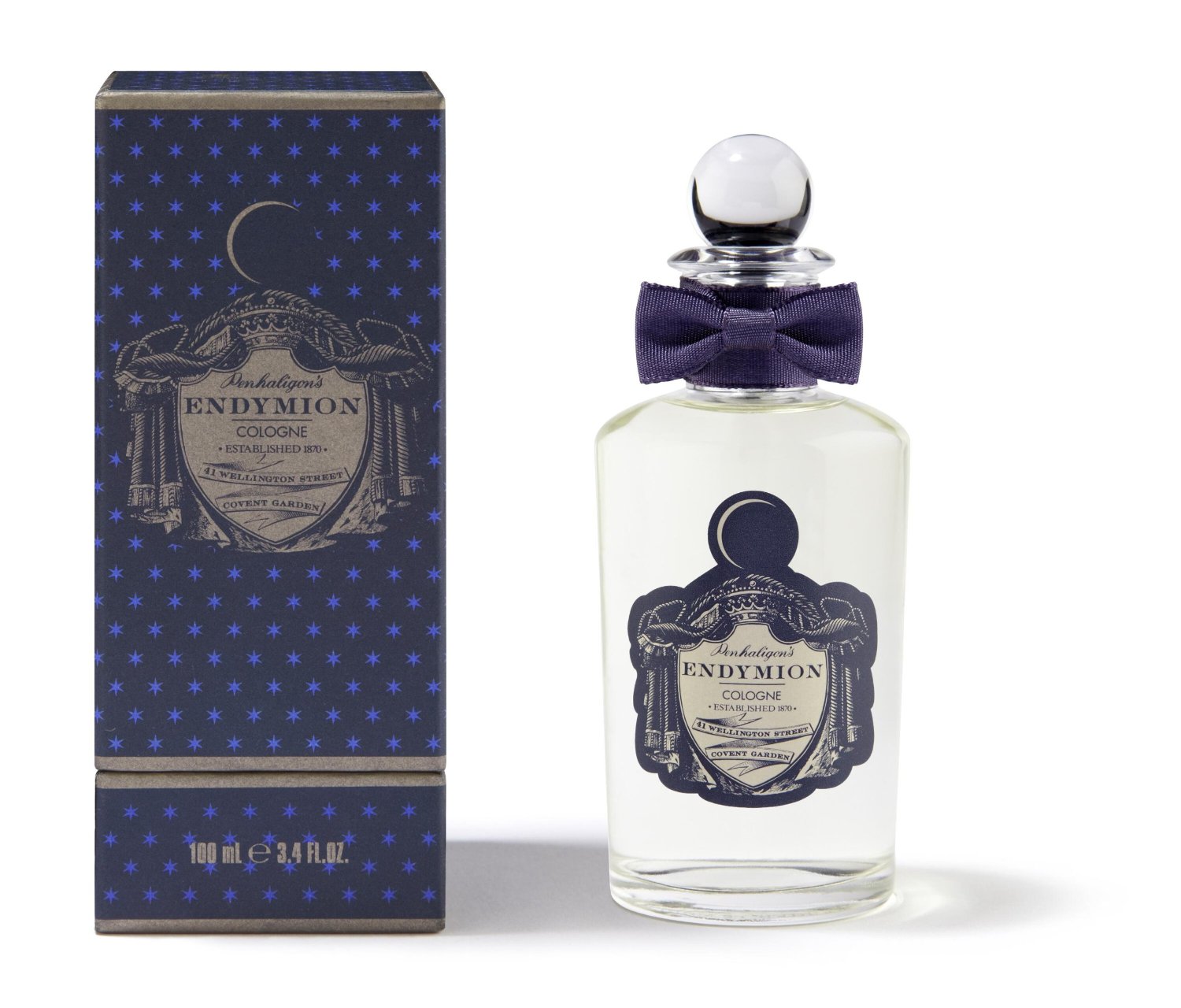
Endymion by Penhaligon's (2003)

Many lows, but some highs indeed.


One of the most (or should I say, “few”) intriguing fragrances by Penhaligon’s together with Sartorial, both sharing the same peculiar feature – showing a sort of deceptive designer-oriented nature, but creatively elaborating it with what I’d personally consider an interesting and very compelling “artistic” twist (sorry for that, I hate the concept of “artistry” applied to fragrances; don’t take it too literally, it’s just meant to refer to the creativity involved in this). Endymion is basically a very gentle, impeccable, sophisticated and truly British in spirit sort of plushy powdery-gourmand Oriental scent with a fantastic smooth bergamot opening and a coffee-infused, musky-woody and slightly honeyed-resinous foundation, that overall undoubtedly contains echoes of many designers – from YSL La Nuit de l’Homme to Zegna Intenso to the drydown of Rochas Man, but it wouldn’t really be fair to compare them. There’s echoes, they may share a similar sort of inspiration, but that is really not enough to make a proper of comparison in my opinion, as their “substance” differs enormously. Endymion has a whole different quality and texture, which briefly put, is better – or well, surely more fascinating. It smells at once more substantial than them (except for Rochas Man maybe, that was a masterpiece already), more crisp, more quality, and most of all delightfully more ethereal, impalpable, boundless and sophisticated. “Emptier yet fuller”, if that makes sense. And it’s not simply a matter of lightness, I think it’s just a whole different approach and construction, and that’s what marks the difference.

As Diamondflame brilliantly explained below in fact, Endymion belongs to that small family of “airy”, weightless (yet more than substantial and rich in character) scents together with Hermès Cuir d’Ange or Prada Infusion d’Iris: stuff which doesn’t smell like a “normal” blend of notes, just rather a unique heavenly whiff of “pure scent”, which you’ve to take and enjoy for, well, just what it is – in which the materials are so good and blended so effortlessly well and out of any formal pattern, that you only get “it”, as a whole. And that’s truly a delightfully, poetic effect on skin, as you almost feel you aren’t wearing a fragrance – you rather feel surrounded by an impalpable, almost nondescript yet perfectly detectable and enjoyable scented aura of distinguished lavendery-gourmand British class, tightly blended and masterfully balancing a sort of “double cleanness” – clean zesty top notes of bergamot, clean “laundry-talc” musk and soapy sandalwood on the base notes, wrapped around a warm, velvety heart of lavendery-gourmand-herbal elegance with a perfectly mannered shade of woody smoke (which will arise more prominently on the drydown). It’s warm, sunny, cozy like an English sunset. It feels familiar, but unique. Truly irresistible. I’m probably over-romanticizing this and I am not sure if I made some sense with my description, but just I enjoy immensely the way Endymion disguises its evocative uniqueness under a deceptive, easy-to-dismiss designer-oriented look.  And regardless of that it just smells fantastic, surely more on the discreet side of the spectrum projection-wise (albeit quite persistent), but it fits the scent and the inspiration perfectly. A lovely uplifting gem.

8,5/10

Ciel Man by Amouage (2003)


One of the most unusual Amouage scents I’ve ever tried, and overall also one of the most unusual fragrances I’ve ever sniffed in general. The uncommon nature of Ciel lies to me in its very complex texture made of, say, several thin layers perfectly matching one onto another, which I would have never thought that could blend so perfectly together considering them singularly. It’s basically an amazing sharp symphony played around several nuances of green, peach and white. A lot of inspirations come into play here, from a herbal-mineral masculine fougère (Guy Laroche Horizon anyone?) to a slightly creamy-green sort of Gucci Envy for Women type of blend, connected by an old-school, extremely sophisticated Chanel-esque soapy-fruity axe of white flowers – jasmine, mostly – and peachy notes, all framed within a gentle yet very crisp “barbershop” layout of lavender, sandalwood and vetiver. Basically a sort of bizarre “feminine fougère”, so to speak, as it smells clearly rooted into the classic family of green/barbershop fougères but throwing in a bold “feminine” aura of floral and fruity-powdery notes, and most of all, a very peculiar – and again, more on the feminine side – substance: very breezy, clean, sharp, transparent, almost “crunchy” in its crisp leafiness, at once graceful and silky. I’m not that into gender categorizations but one can really see this isn’t exactly a range of “macho” features – and I fear this is why many men seem disappointed by Ciel.

So overall, something completely different from most of other Amouage offerings for men. No opulence, no somber incense-resinous sumptuosity, actually the complete opposite: Ciel Man, surely aptly named to this extent, is all played on a very clean heart palette of pastel colours which are all about floral silkiness, faint greenness, gentle fruitiness, sharp cleanliness, somehow feeling kind of “formal” and almost aseptic (oddly in a good way, a “calming” and soothing sort of asepticness). As I said there is indeed a subtle green-barbershop fougère vibe though, a sort of very discreet frame made of “mineral” herbs, light vetiver, soapy sandalwood and spices, perfectly acting as the manlier counterpart to the breezy feminine heart of Ciel. But still it’s probably more leaning towards the “floral-green-clean delicate stuff”. The drydown leaves most of the stage to the woody-spicy notes, so as time passes Ciel becomes more and more “masculine”, dry and woody, with a whiff of smoke too, still with a decided green-white mood.

The quality is more than remarkable to any extent for me, both of the creativity and of the materials, as I smell a lot of notes and nuances with an astounding clarity and richness – which is one of the things I love the most in the nicest Amouage scents, their intricate yet very clear texture, something only top-notch quality materials can allow you to build. It’s all consistent and harmonic, and yet perfectly “separate”, allowing you to dive into the composition and smell the notes with a heart-melting clarity and deepness. Overall an unusual, crisp green-azure unisex gem with some hidden darker nuances which I’d really recommend to any fragrance fan, at least for a try. Many seem to mistake it cleanliness and apparent light breeziness for dullness, while it’s actually an incredibly creative, complex and interesting blend for me (or I maybe wrong, of course). It could, and maybe should be a bit more powerful, but I appreciate its discreet yet long-lasting presence on skin.

8-8,5/10